Carlow Castle - The Stronghold by the Barrow
A reflective Irish heritage song about Carlow Castle, the Barrow crossing and two surviving towers that still carry eight centuries of town memory.

County Carlow • Place song
A powerful medieval ruin above the meeting of the Rivers Barrow and Burren in Carlow town, where Norman architecture, royal administration and local memory of song and history meet.
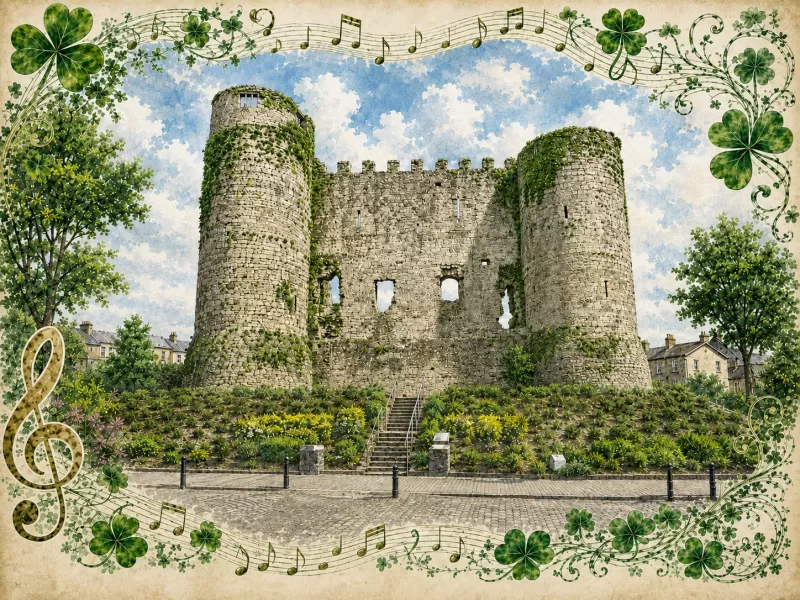
A reflective Irish heritage song about Carlow Castle, the Barrow crossing and two surviving towers that still carry eight centuries of town memory.
Place Story
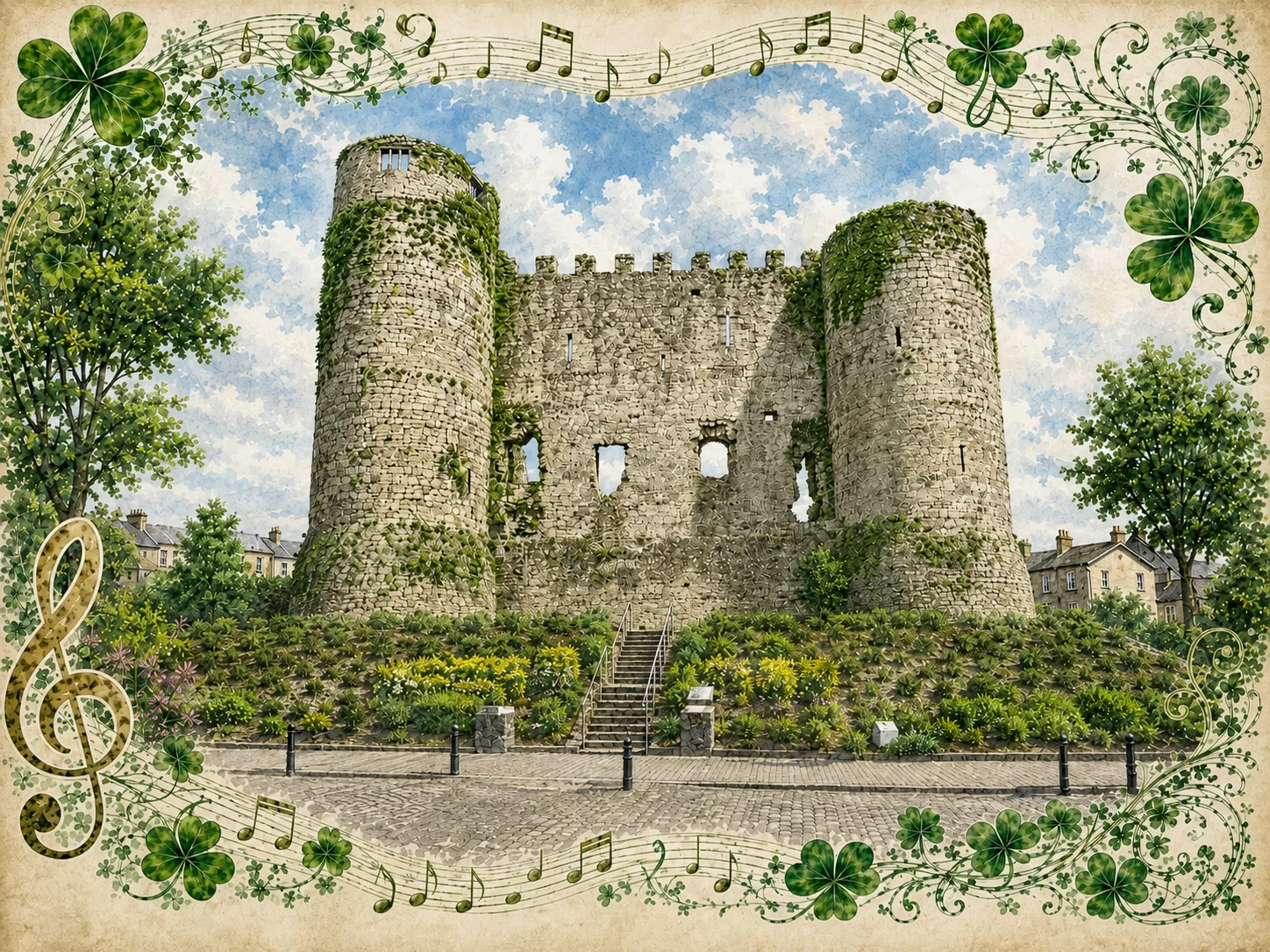
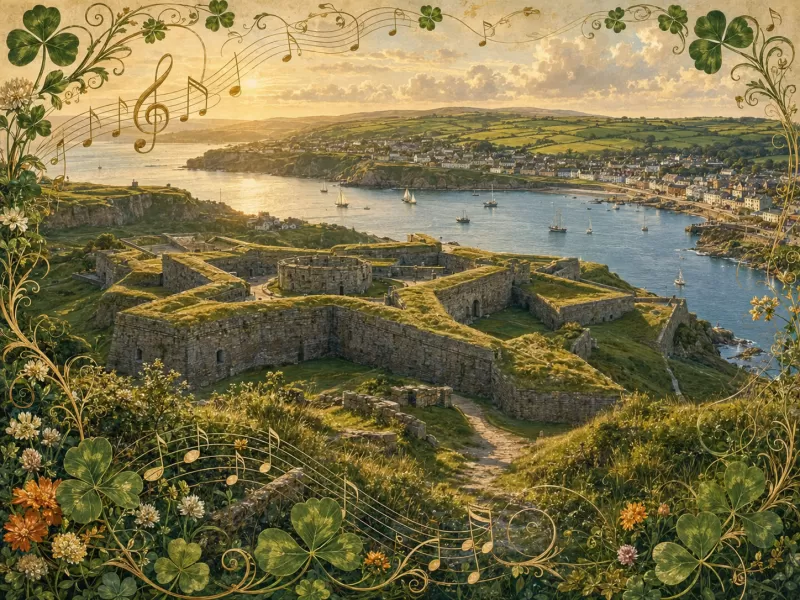
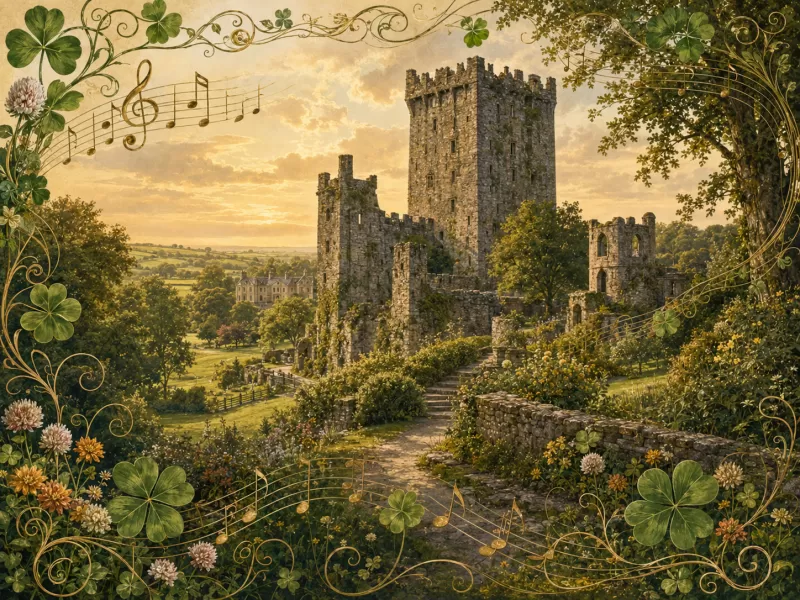
Carlow Castle stands on a raised site near the confluence of the Rivers Barrow and Burren in Carlow town. The surviving west wall and two round towers are the remains of an ambitious early thirteenth-century stronghold, generally attributed to William Marshal and dated to about 1208-1213. It replaced an earlier earth-and-timber fortification and belonged to a small group of four-towered keeps whose rectangular cores were strengthened by cylindrical corner towers. Cross-shaped arrow loops, very thick walls and a battered stone plinth reveal the castle's military purpose, while its halls, kitchens, administrative rooms and timber floors show that it was also a residence and centre of government.
The castle's position gave it command of river crossings and access to the navigable Barrow. In the medieval period grain and wool could move south towards New Ross, while wine, salt and other imported goods travelled upriver. Carlow grew in the castle's protective shadow, and the stronghold became closely tied to the town's walled medieval life. During the fourteenth century the Irish Exchequer was moved to Carlow, bringing officials, clerks and major building works; a third storey may have been added to accommodate this administrative role. The Exchequer returned to Dublin in 1394, but the castle remained an important frontier fortress and later became involved in the Kildare Rebellion, the 1641 Rebellion and the Cromwellian campaign.
The ruin seen today was shaped by a disastrous nineteenth-century attempt at conversion. In 1814, while adapting the building for use as an asylum, Dr Philip Parry Middleton used explosive charges and caused the eastern half of the castle to collapse. Much of the unstable masonry was later removed, leaving the two western towers and the wall between them. Archaeological excavation and conservation work in the 1990s clarified the site's earlier phases and prepared it as a state-owned National Monument. Today Carlow Castle is a compact but striking place of stone, gardens and town memory: not a reconstructed fortress, but a surviving fragment that makes eight centuries of change visible in one view.
LOCAL MEMORY
Carlow Castle is remembered less as a remote monument than as part of the town itself. Houses, streets and planted ground now sit close to the remaining towers, while the Barrow and Burren lie nearby rather than directly at the foot of the modern visitor view. That contrast matters: the castle once commanded an island-like defensive landscape of water, marsh, causeways and crossings, yet today it stands within ordinary town life. People pass it on foot, see it from Castle Hill and recognise the two surviving towers as one of Carlow's clearest landmarks.
For Ireland in Song, the strongest memory is the meeting of stone and moving water. The castle held soldiers, officials, clerks, prisoners, stores and working households; the river carried grain, wool, wine and salt; the town grew under its protection. The surviving ruin also carries a second, more human memory: power can be damaged by error, but a broken place can still remain meaningful. The song should therefore be reflective rather than martial, allowing the Barrow to move beneath the history while the two towers keep a quieter watch over modern Carlow.
LYRICS
Above the meeting waters, where the Barrow bends away,
The old stone keeps the weather of an eight-hundred-year day,
Before the walls were lifted, earth and timber held the ground,
Then Marshal's towers rose over road and river sound.
Four corners watched the crossing, thick walls against the rain,
A hall of fire and timber, a store of wool and grain,
The town grew in its shadow, the boats moved south and north,
And Carlow Castle guarded every road that carried forth.
The river carried memory,
The stone remembered more,
Of hands that built and watched here
Beside the Barrow shore.
Carlow Castle, Carlow Castle,
Stronghold by the Barrow's flow,
Two old towers keep the silence
Of the years they used to know.
Carlow Castle, Carlow Castle,
Where the Burren meets the stream,
Broken stone above the water,
Still awake inside the dream.
The hall received the judges, the kitchen held the flame,
The clerks and royal officers recorded debt and name,
When Ireland's Exchequer travelled from Dublin to this place,
A third floor rose for parchment, seal and measured grace.
Downriver went the harvest, grain and wool towards New Ross,
Upriver came the wine and salt through current, rain and moss,
The castle was a household, a fortress and a crown,
A working heart of government above the growing town.
Carlow Castle, Carlow Castle,
Stronghold by the Barrow's flow,
Two old towers keep the silence
Of the years they used to know.
Carlow Castle, Carlow Castle,
Where the Burren meets the stream,
Broken stone above the water,
Still awake inside the dream.
The frontier years grew harder, and the walls were tried again,
Through rebellion, siege and changing hands, through cannon smoke and rain,
No triumph needs repeating, no old anger needs a flame,
Only courage, fear and sorrow carried quietly in the name.
The Exchequer left for Dublin when the fourteenth century waned,
Yet the stronghold kept its watch while crown and country changed,
Until the guns of Ireton faced the final southern stand,
And another chapter closed beside the river and the land.
Cross-shaped light within the stone,
Open sky through walls alone,
Not a hymn of war or crown,
But mercy falling on the town.
Let the bells beyond the river
Call the living through the day,
While the old walls keep their witness
And the water moves away.
Then one misguided morning brought the powder to the base,
And half the ancient building fell and vanished from the place,
The eastern walls were broken, their stone was cleared away,
But two round towers and western wall remained to meet the day.
The spades returned in later years to read the buried ground,
The timber fort, the kiln and well, the older ditch were found,
Now gardens soften Castle Hill, and town life passes near,
But Carlow Castle still makes eight long centuries appear.
Carlow Castle, Carlow Castle,
Stronghold by the Barrow's flow,
Two old towers keep the silence
Of the years they used to know.
Carlow Castle, Carlow Castle,
Where the Burren meets the stream,
Broken stone above the water,
Still awake inside the dream.
Stone and river, road and rain,
What was broken still remains,
Carlow Castle, quiet and strong,
Keeps the town within its song.
By the meeting waters, the old walls carry on.
Explore the project
From here you can return to the full Songs by Place directory, suggest another Irish place through Request a Song, or send local corrections and memories through the Contact page.
KEYWORDS
Community
Share your thoughts about this place, its story, the song, or your own visit.